The story
About a thousand years ago, a scientist named Ibn al-Haytham was born in Basra, in today's Iraq. He loved asking questions: "How do we see? What is light?"
In those days many people believed that our eyes shoot out rays to touch the things we look at. Ibn al-Haytham was not sure. "Let us not just believe," he said. "Let us test it."
Later in life, in Cairo, he spent years shut away in his house. Instead of feeling sad, he kept experimenting. In a dark room, he noticed that light coming through a tiny hole made an upside-down picture of the world outside on the wall.
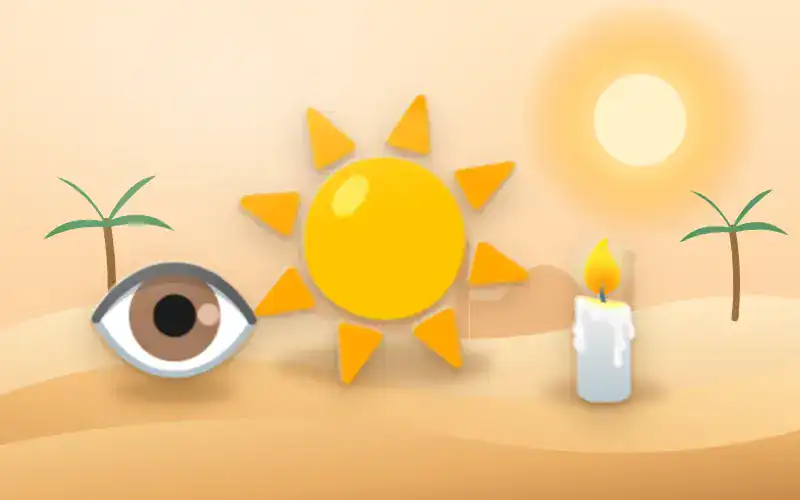
Through careful experiments he showed that light travels in straight lines and bounces off objects into our eyes — that is how we see! He wrote it all down in a great work, the Book of Optics.
His way of working — ask a question, test it, check the results, and don't just trust what others say — helped shape modern science. That dark room was an early "camera obscura", the idea behind every camera today.
Moral of the Story
Ask questions, test your ideas, and keep learning even in hard times.
कहानी — इब्न अल-हैथम और रोशनी का राज़
लगभग एक हज़ार साल पहले, आज के इराक़ के बसरा शहर में इब्न अल-हैथम नाम के एक वैज्ञानिक पैदा हुए। उन्हें सवाल पूछना बहुत अच्छा लगता था: "हम देखते कैसे हैं? रोशनी क्या है?"
उन दिनों बहुत-से लोग मानते थे कि हमारी आँखों से किरणें निकलती हैं, जो उन चीज़ों को छूती हैं जिन्हें हम देखते हैं। इब्न अल-हैथम को इस पर पक्का यक़ीन नहीं था। उन्होंने कहा, "चलो, सिर्फ़ मान न लें। चलो, इसे परखकर देखें।"
बाद में, क़ाहिरा में, उन्होंने कई साल अपने घर में बंद रहकर बिताए। उदास होने के बजाय वे प्रयोग करते रहे। एक अँधेरे कमरे में उन्होंने ग़ौर किया कि एक छोटे-से छेद से आती रोशनी दीवार पर बाहर की दुनिया की उलटी तस्वीर बना देती है।
ध्यान से किए गए प्रयोगों से उन्होंने दिखाया कि रोशनी सीधी रेखाओं में चलती है और चीज़ों से टकराकर हमारी आँखों में आती है — इसी तरह हम देखते हैं! उन्होंने यह सब एक महान ग्रंथ में लिखा, जिसका नाम है "किताब अल-मनाज़िर", यानी "प्रकाश की किताब"।
उनका काम करने का तरीक़ा — सवाल पूछो, उसे परखो, नतीजे जाँचो, और दूसरों की बात पर आँख मूँदकर भरोसा मत करो — आज के विज्ञान की नींव बना। वह अँधेरा कमरा एक शुरुआती "कैमरा ऑब्स्क्यूरा" था, और आज के हर कैमरे के पीछे यही विचार है।
कहानी की सीख
सवाल पूछो, अपने विचारों को परखो, और मुश्किल समय में भी सीखते रहो।
What Children Can Learn
- How we see light
- The scientific method
- Turning hard times into learning time
Key Values
- Curiosity
- Patience
- Testing ideas
Emotional & social lesson
Good scientists check facts before believing them.
Key vocabulary
- experiment
- a test to find out if an idea is true
- optics
- the science of light and seeing
- camera obscura
- a dark room or box where a tiny hole makes a picture
Think & Answer
- What did people believe about eyes long ago?
- How did Ibn al-Haytham test his idea?
- What question would you like to test?
Parent–child activity
Make a pinhole viewer: poke a tiny hole in a box, put tracing paper at the back, and look at a bright window. The picture is upside down!
Parent / Teacher Discussion
Ibn al-Haytham (c. 965–1040, known in Europe as Alhazen) wrote the Book of Optics. Accounts say he was confined to his house in Cairo for years; the story that he pretended to be ill to escape an impossible task comes from later historians.
Try a Learning Activity
Read the story → answer the questions → practise on the General Knowledge island and work towards a 🏅 Gold Medal.
FAQ
What is the moral of “Ibn al-Haytham and the Secret of Light”?
Ask questions, test your ideas, and keep learning even in hard times.
What age is “Ibn al-Haytham and the Secret of Light” suitable for?
It suits children of about 8+ years, read aloud or read together.