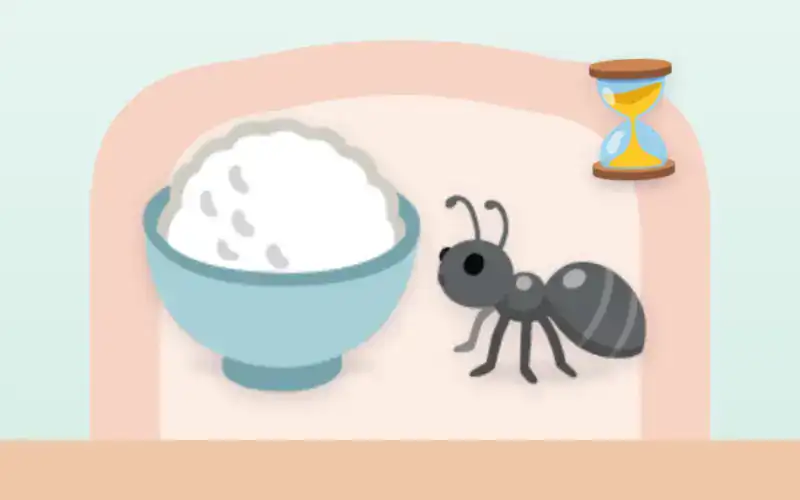
The story
One morning a courtier who loved puzzles walked into the court carrying a big bowl. Inside, white sugar and pale sand were mixed together. “Birbal,” he said with a grin, “please separate every grain of sugar from the sand. You may not use water.”
Everyone peered into the bowl. The grains were so tiny and so alike that nobody could tell sugar from sand. “It would take a hundred years to pick them out one by one!” someone said. Akbar raised an eyebrow. “Well, Birbal?”
Birbal took the bowl out to the palace garden. He found a spot near an anthill under a mango tree and spread the mixture thinly on the ground in a wide circle. Then he dusted off his hands and said, “Come back tomorrow morning.”
Soon a line of busy ants marched out of the anthill. They sniffed the sand and walked straight past it. But each time they found a grain of sugar, they picked it up and carried it home. All day and all night, the tiny workers kept going.
The next morning the courtiers came to look. Only plain sand was left on the ground! “Where is the sugar?” asked the courtier. Birbal pointed at the anthill. “My helpers knew the difference better than any of us. They have taken it all to their store.”
Akbar laughed and clapped his hands. “You did not need clever fingers, Birbal — only clever eyes to see who could do the job best.”
Moral of the Story
A smart helper knows when to ask others who are better suited to a job.
More stories on Friendship & TeamworkStories for this age
कहानी — रेत में चीनी
एक सुबह पहेलियों का शौक़ीन एक दरबारी एक बड़ा कटोरा लेकर दरबार में आया। उसमें सफ़ेद चीनी और हल्की रेत आपस में मिली हुई थीं। "बीरबल," उसने मुस्कुराकर कहा, "ज़रा चीनी का हर दाना रेत से अलग कर दीजिए। पानी का इस्तेमाल मना है।"
सबने कटोरे में झाँका। दाने इतने छोटे और इतने एक जैसे थे कि कोई भी चीनी और रेत में फ़र्क़ नहीं कर पा रहा था। "एक-एक दाना चुनने में तो सौ साल लग जाएँगे!" किसी ने कहा। अकबर ने भौंह उठाई। "तो बीरबल?"
बीरबल कटोरा लेकर महल के बग़ीचे में गए। आम के एक पेड़ के नीचे चींटियों की एक बाँबी के पास उन्होंने वह मिश्रण ज़मीन पर एक बड़े घेरे में पतला-पतला फैला दिया। फिर हाथ झाड़कर बोले, "कल सुबह आइएगा।"
जल्दी ही मेहनती चींटियों की एक क़तार बाँबी से बाहर निकली। उन्होंने रेत को सूँघा और सीधी आगे बढ़ गईं। पर जब भी उन्हें चीनी का कोई दाना मिलता, वे उसे उठाकर घर ले जातीं। सारा दिन और सारी रात ये नन्ही मज़दूर काम में लगी रहीं।
अगली सुबह दरबारी देखने आए। ज़मीन पर सिर्फ़ सादी रेत बची थी! "चीनी कहाँ गई?" दरबारी ने पूछा। बीरबल ने बाँबी की ओर इशारा किया। "मेरी मददगार चींटियाँ हम सबसे अच्छा फ़र्क़ जानती थीं। वे सारी चीनी अपने भंडार में ले गई हैं।"
अकबर हँसे और ताली बजाई। "बीरबल, तुम्हें फुर्तीली उँगलियों की ज़रूरत नहीं पड़ी — बस समझदार आँखों की, जो देख सकें कि यह काम सबसे अच्छा कौन कर सकता है।"
कहानी की सीख
समझदार वही है जो जानता है कि कब किसी ऐसे से मदद माँगी जाए जो उस काम में ज़्यादा माहिर हो।
What Children Can Learn
- Teamwork
- Noticing nature
- Using the right helper
Emotional & social lesson
Asking for help, from people or even from nature, is a clever choice, not a weak one.
Key vocabulary
- separate
- to pull things apart from each other
- grain
- a very tiny piece of something
- anthill
- a little mound where ants live
Think & Answer
- Why couldn’t the courtiers pick out the sugar?
- How did the ants know which grains to take?
- When have you asked someone to help with a job they do well?
Parent–child activity
Mix a spoonful of dry rice with a spoonful of dry lentils, then race to sort them into two bowls — and talk about who or what could do it faster.
Parent / Teacher Discussion
Akbar and Birbal were real historical people, but this is a folk tale told about them, not documented history. Ants really are drawn to sugar by smell.
Try a Learning Activity
Read the story → answer the questions → practise on the Logic & Intelligence island and work towards a 🏅 Gold Medal.
FAQ
What is the moral of “Sugar in the Sand”?
A smart helper knows when to ask others who are better suited to a job.
What age is “Sugar in the Sand” suitable for?
It suits children of about 5–10 years, read aloud or read together.
Is “Sugar in the Sand” a true story?
No. It is a folk tale. The witty stories about them, however, are folk tales that grew up and were retold long afterwards — they are not documented historical events.